

TL;DR - On the last two trips, the ARB compressor hasn't held pressure on cold mornings, but once the engine bay warms up, it starts to work again. I'm hoping that replacing the seals will solve the problem.

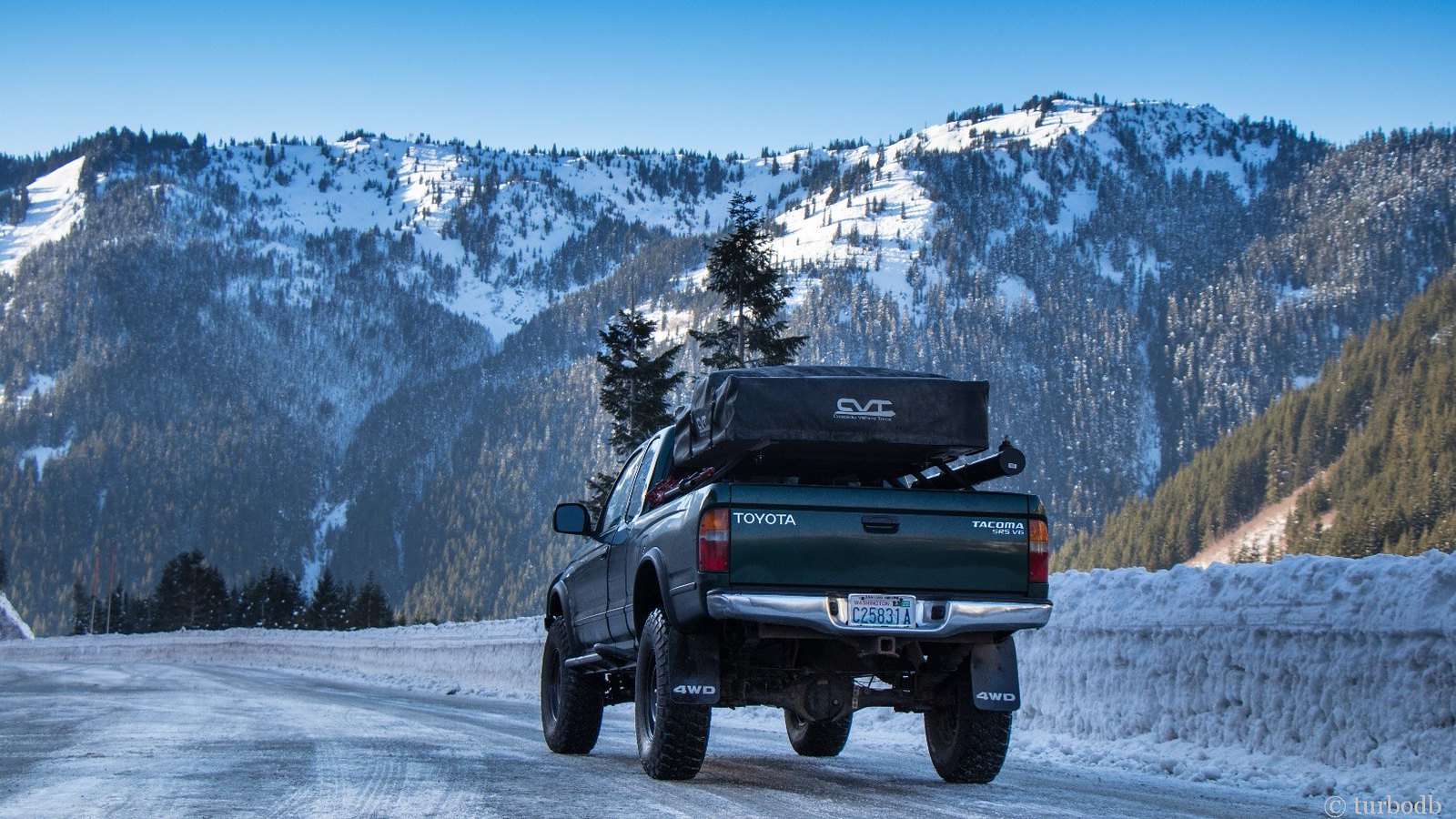
Once on each of our recent trips to Canada - first to Bella Coola, and then further north - we woke up to a completely flat rear passenger tire on the Tacoma. It was a slow leak - unnoticeable while we were out on the trail during the day - and should have been easily remedied at the time by just pumping a few more pounds of pressure into the tire while we ate breakfast.
The problem turned out to be with the ARB CKMA12 air compressor. It wouldn't hold pressure.
Before I get too far into this, I should be very clear: I've had the compressor for a decade at this point, and it's performed flawlessly - inflating thousands of tires and consistently activating the front locker - all while living in the engine bay and with exactly zero service at all over that entire period.
And, it's not that the compressor didn't work at all. As soon as the engine warmed up, it seemed to hold pressure again and faithfully inflated the flat tire just like before. We were never stuck.
Still, I wanted to nip this in the bud before it got any worse, so upon returning home I ordered a replacement compressor o-ring kit (320301) so I could replace all the seals, alleviating the issue.

installation of the new o-rings was easy enough. I first pulled the compressor motor out of the blue aluminum housing, and got it onto the workbench, where I quickly removed the air filter so I could dig into the rest of the assembly.

All of the fasteners on the motor are 10mm bolts of varying lengths, which made removal and reinstallation a breeze. Soon I had the cylinder as well as the air filter flange / cam access port removed, exposing all of the seals I'd need to replace in just a few minutes.


With the seals exposed, it was a simple matter of extracting them with a small pick, rubbing some high temperature grease on the new replacement seals, and buttoning everything back up.
Will that solve the problem? I don't know for sure - I suppose that the piston itself might also be allowing air to escape - but I hope it does! If it doesn't, I'll certainly be sure to report back.
In this Series





Discussion
No comments yet.